The things we now take for granted…
It might be important to take a minute at this point in our story to note that until 1925, everything east of Buena Vista Avenue (a block west of Yale Boulevard) was outside of the city limits. Early homes on the sand dunes of the east lacked the modern conveniences enjoyed today. City water and sewer, paved roads, power, and street lighting did not exist on the East Mesa for some time. Although the Albuquerque Water Company had constructed a reservoir on the UNM Campus by 1884, its water lines only served downtown. Heights’ residents relied on private wells, and cesspools were common for household waste (remnants of this early infrastructure can still be found in backyards today). As more homes emerged on the East Mesa, the cesspool/well combo started to be a real problem.
Water Issues
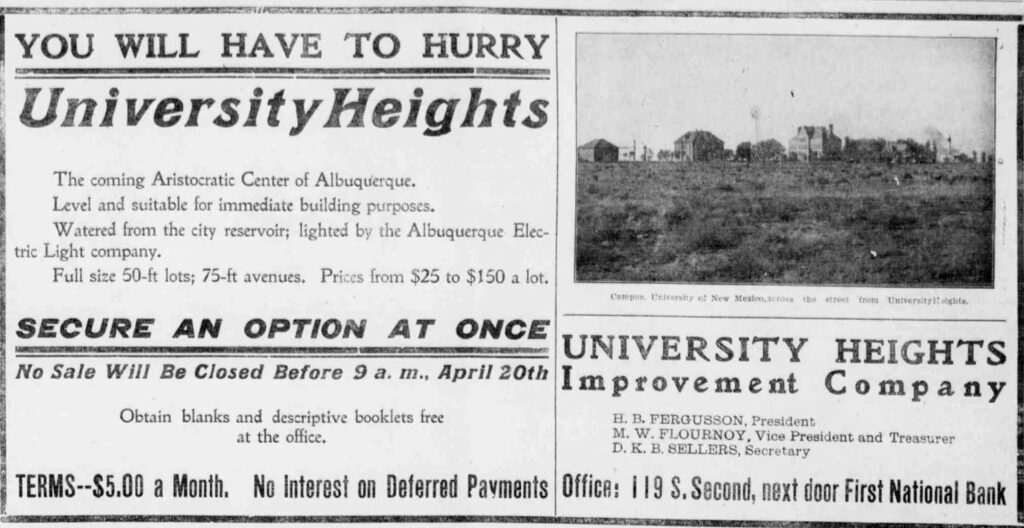
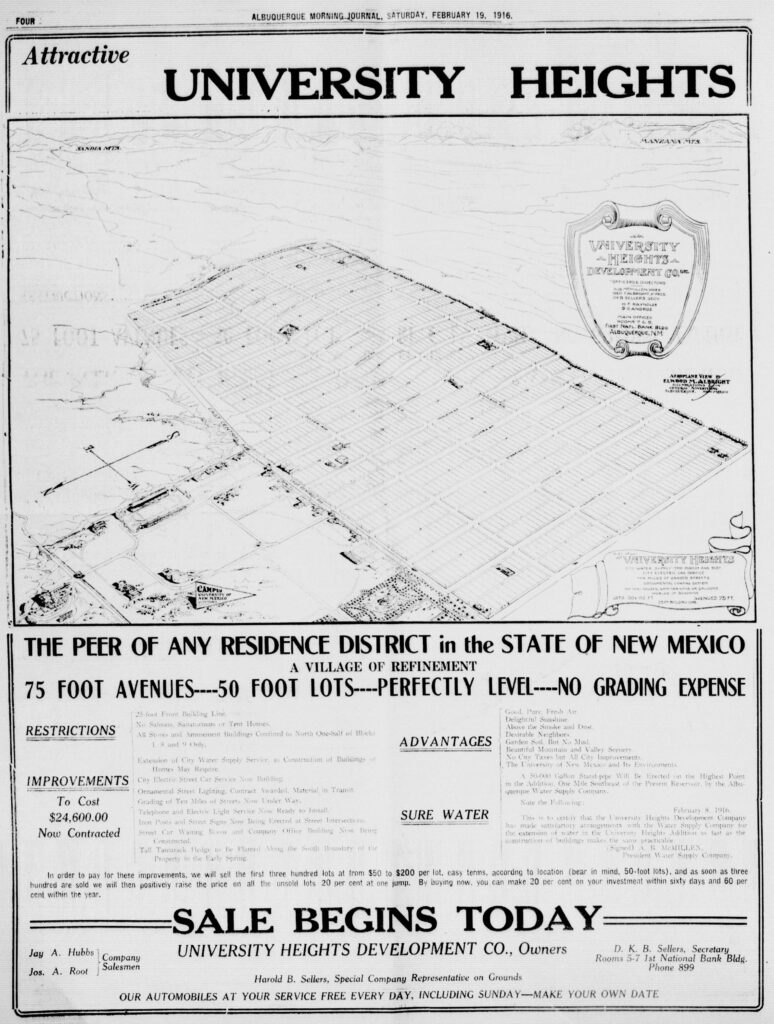
In 1906, initial advertisements for University Heights boldly promised water from the city reservoir. Ten years later, in 1916, the University Heights Development Company found themselves installing a 50,000-gallon water tank at the highest point to spur development – which later became part of a house on Carlisle Boulevard (but that’s a story for later). The city finally committed to purchasing the University Heights water system and consolidated the various water systems on the East Mesa in 1925, nearly 20 years after the University Heights Investment Company began advertising lots in the “Aristocratic Center of Albuquerque.”
Outhouses Anyone?
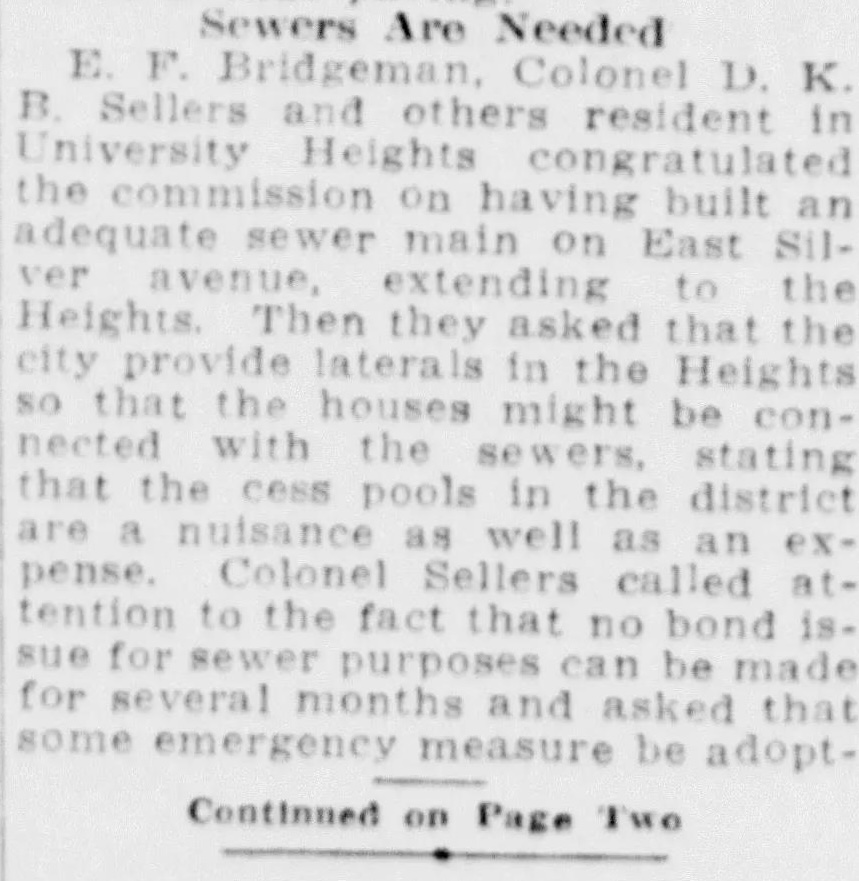
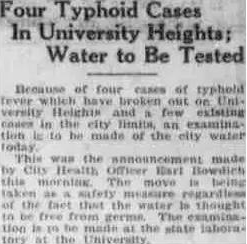
There were other pressing infrastructure concerns, as well, in the “Village of Refinement.” Indoor plumbing had become standard in American homes by the 1920’s; however, sanitary sewer lines were not available in many areas of Nob Hill until the late 1930’s. Restrictive covenants in University Heights, Monterey Hills, and College View Additions (and probably many others) permitted outhouses. Early homes built with indoor plumbing drained waste to cesspools— underground collection areas for household sewage. Typhoid outbreaks were common. The situation had grown into a large enough problem that, in 1925, D.K.B. Sellers was asking for an emergency solution stating, “the cesspools (which exceeded 300 at that point) in the district are a nuisance as well as an expense.” On occasion, a “trash wagon” would come though the alleys to collect accumulating household garbage.
Power Struggles
Heights’ developers assured electricity in 1906 ads, yet it was 1916 by the time the City Electric Company announced an extension to the Heights. Property owners along Central Avenue in University Heights paid for the ornamental street lighting in 1922 which extended to Yale, known as Tingley’s “Great White Way.” Although advertisements touted the fresh air “200 feet above the smoke, dust, mud and noise,” early homes in the Heights relied on coal for kitchen stoves and heat. These homes typically had an extra chimney for ventilation that ran through the kitchen down to the basement furnace and a small slit at the top of the basement wall for coal delivery.
A Rough Commute
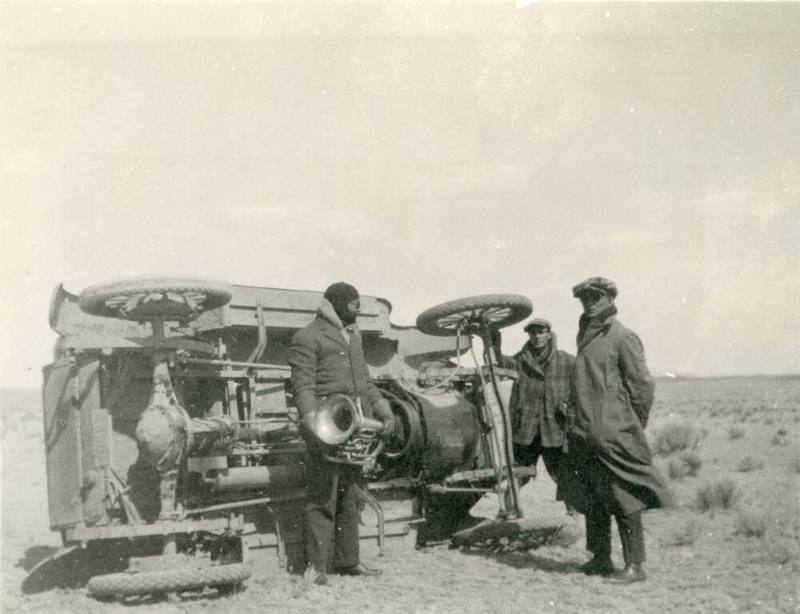
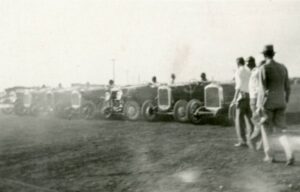
Access to the Heights posed its own challenge. The electric streetcar promised in 1906 only reached Edith Boulevard (about 3 blocks east of the railroad tracks) by 1908. The “Highland Line” did not reach the University for another 10 years. Dirt roads, aligning generally with what is now Central Avenue, Lomas Boulevard, and Gold Avenue traversed the East Mesa dunes between downtown and the Tijeras Canyon. By carriage, the journey to the Heights took over an hour and half, and cars often had to be towed up the hill due to sand and other conditions. Watering trucks were a common sight throughout town in an ongoing effort to keep the dirt down and dust out. For some perspective on automobile transportation at the time, in 1912 D.K.B. Sellers organized the first auto race between Albuquerque and Santa Fe. The winning finishing time for the 64-mile race was 9.5 hours!
Despite the lofty promises of the University Heights Improvement Company, it took over 30 years from George Albrights’ initial investment in 1897, and over 20 years of Colonel D.K.B. Sellers antics (more to come on that topic), to get the basic infrastructure in place to support the development boom of Nob Hill 100 years ago.
©️ 2026 Michelle Allison