Things are often not quite what they seem.
While we’ve established that the demand for the dry climate and high altitude lured many health seekers to Albuquerque, the population boom in the early part of the century and development demand on the East Mesa was not by happenstance. It should be noted that Albuquerque’s role in the wellness trade was part of a statewide strategy to increase the “Anglo” population in New Mexico. Although New Mexico’s population had far exceeded the 60,000-person requirement for statehood, its application had been repeatedly denied by 1889, due prejudice against the majority of the state’s population being of “Spanish descent.” Thus, the state saw the “wellness” industry as having strong potential to increase the “Anglo Saxon” population and began incentivizing the sanatorium industry with tax subsidies.
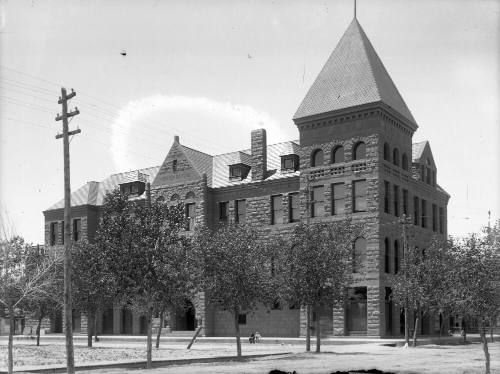
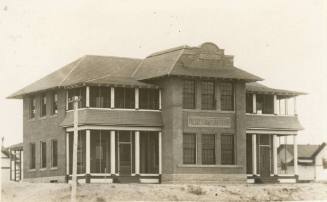
The Commercial Club, Albuquerque’s first iteration of the Chamber of Commerce, had been actively courting wellness seekers (those suffering from TB) since the 1890’s. This strategy had been effective in attracting new residents. Demand soon outpaced both supply and the city’s scramble to meet the needs of the sick arriving daily. Tent communities and primitive cottages soon dotted the land east of town. In 1902, the Sisters of Charity founded St. Joseph’s, the Albuquerque’s first sanatorium, to meet the needs of this growing population.
Seeing the success of their initial strategy, members of the Commercial Club doubled down on wellness tourism. Around 1908, members purchased land on the East Mesa to support the development of the second TB resort, resulting in Southwest Presbyterian (now Presbyterian Hospital). The wellness industry, with the support of incentives provided through New Mexico’s territorial government as well as marketing by Atchison, Topeka, and Santa Fe Railway who recognized “Lungers” as an opportunity to increase ridership, quickly boosted New Mexico’s population from 195,310 at the end of the 18h Century to 327,301 by the 1910 census. In 1910, congress passed an enabling act allowing New Mexico to adopt a state constitution for admission to the Union and on January 6, 1912, congress welcomed New Mexico as the 47th state ending a 60-year quest for statehood.
gift of Nancy Tucker PA2022.027.029
Soon sanatoria were popping up along Central Avenue and in the Terrace Addition, including Albuquerque Sanatorium (later National Lutheran) in 1909, Cipes (later Methodist Deaconess) in 1912, and Murphey (later St. Johns) in 1915, among numerous smaller institutions. Additionally, during this decade, UNM Hadley Climatology Laboratory Professor John Weinzirl, himself a wellness seeker, published academic articles reinforcing Albuquerque’s health benefits. By 1908, the Highland Line, an extension of the downtown electric trolley service, eased the commute from the downtown railway depot to the university and the East Mesa.
These efforts proved effective in attracting people seeking “the cure” to settle on Albuquerque’s sand dunes, despite the health crisis now affecting the local and indigenous populations. Those electing to convalesce at home preferred to live close to treatment facilities, opting for the “high and dry” climate of the Heights, with family members of “consumptives” staying in health resorts wishing to live close to their loved ones. Both groups of new home buyers increased the demand for bungalows and cottages, and, slowly, development, and disease, began to creep eastward up the mesa.
Take Two
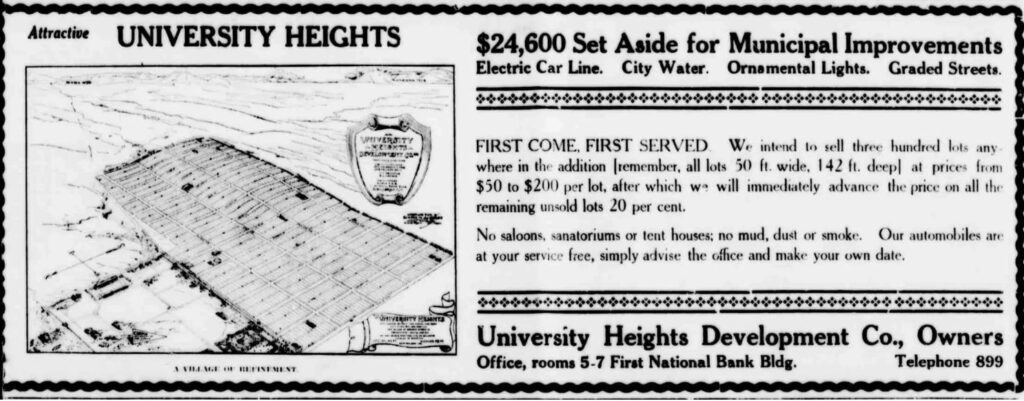
The rapidly expanding wellness industry, which generated an influx of transplants seeking housing, may have been the push needed to spark the lagging development on the East Mesa. In November of 1915, D.K.B. Sellers reincorporated his company as the University Heights Development Corporation, with trustees representing financial powerhouses of the time: Stephen Osgood Andros (whose wife Nell was the daughter of banker Matthew Wells Flourney; Flourney had served as VP of the earlier University Heights Improvement Company), Alonzo Bertram McMillen (president of the Water Supply Company and Occidental Life Insurance Company of Albuquerque), Herbert F. Rayonlds (who served as district judge and was associated with the First National Bank), Joshua Saxton Raynolds (President of First Savings bank and formerly the president of Occidental Life Insurance), and, of course, Sellers himself, who served as secretary. These partners brought needed capital for the costly infrastructure improvements necessary to attract buyers beyond the end of the streetcar line and outside the city limits.
However, development was not without its problems. Check out the excerpt here from Kenneth Balcomb’s autobiography, A Boy’s Life, for an insider’s glimpse into the early trials and tribulations of D.K.B. Sellers.
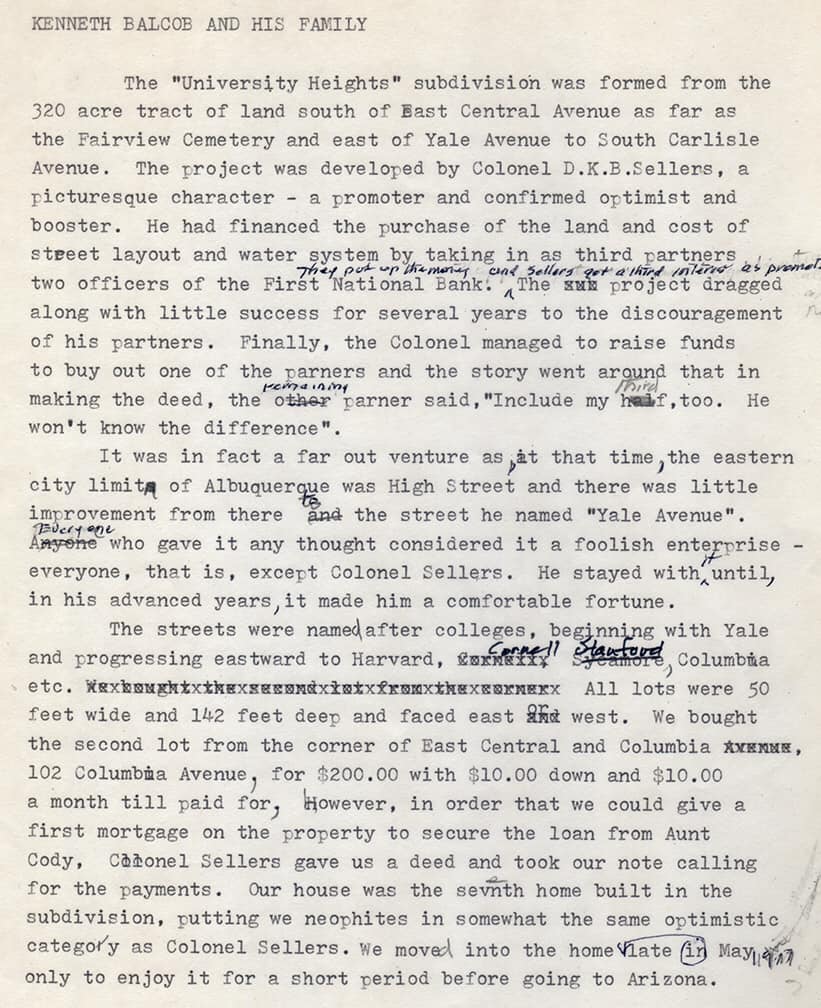
By Kenneth Balcomb
UNM Center for Southwest Research
©️ 2026 Michelle Allison