Hmmm, isn’t there one in San Francisco?
Early Albuquerque developer Colonel D.K.B. Sellers—who was not, in fact, a colonel—is often credited with naming and branding Nob Hill in the early 1900s. Having spent time in California before arriving in New Mexico, Sellers likely believed the name would borrow prestige from San Francisco’s well-known neighborhood.
Interestingly, the moniker didn’t catch on locally right away. In the late 1920s and early 1930s, competition for East Mesa buyers was fierce, and local realtors employed a variety of tactics to promote the unique appeal of their subdivisions. The names “the Heights,” “the Mesa,” “Point Inspiration,” “the Highlands,” and those of the individual subdivisions were featured in the newspaper and in promotional material with much more frequency to reference East Mesa happenings than “Nob Hill.” In fact, the famous photo with Sellers and the sign at the top of the hill was taken around 1940, probably as a promotional piece for the Nob Hill Business Center, which was completed in 1946.
Poetic Justice?
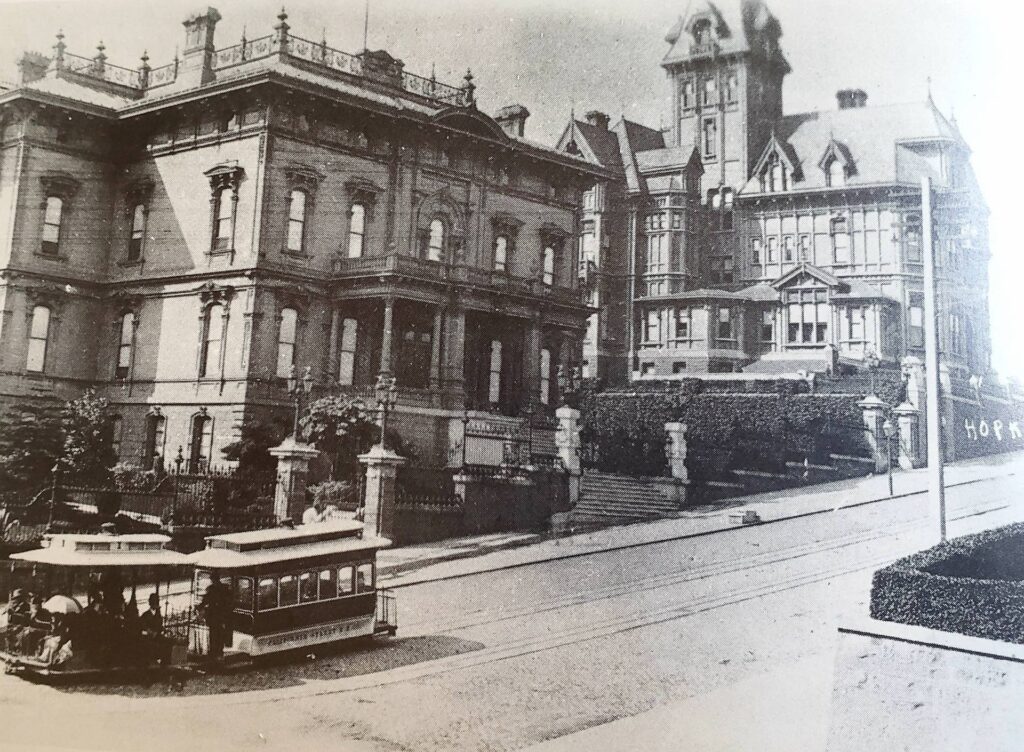
Local historians and authors have often referenced Sellers’ shameless self-promotion and ruthless self-interest. Ironically, his name selection for the area may have been oddly appropriate. Historians have indicated that the naming of “Nob Hill” in San Francisco may have stemmed from a derogatory epithet, “Nabob” used by locals in reference to those living in the exclusive enclave overlooking the Pacific Ocean known as “California Hill.” After the 1949 Gold Rush, the neighborhood became home to the newly established wealthy class in San Francisco, which included the likes of “Big Four” railroad tycoons Leland Stanford, Charles Crocker, Collis Huntington, and Mark Hopkins, as well as gold rush barons, such as James Clair Flood.
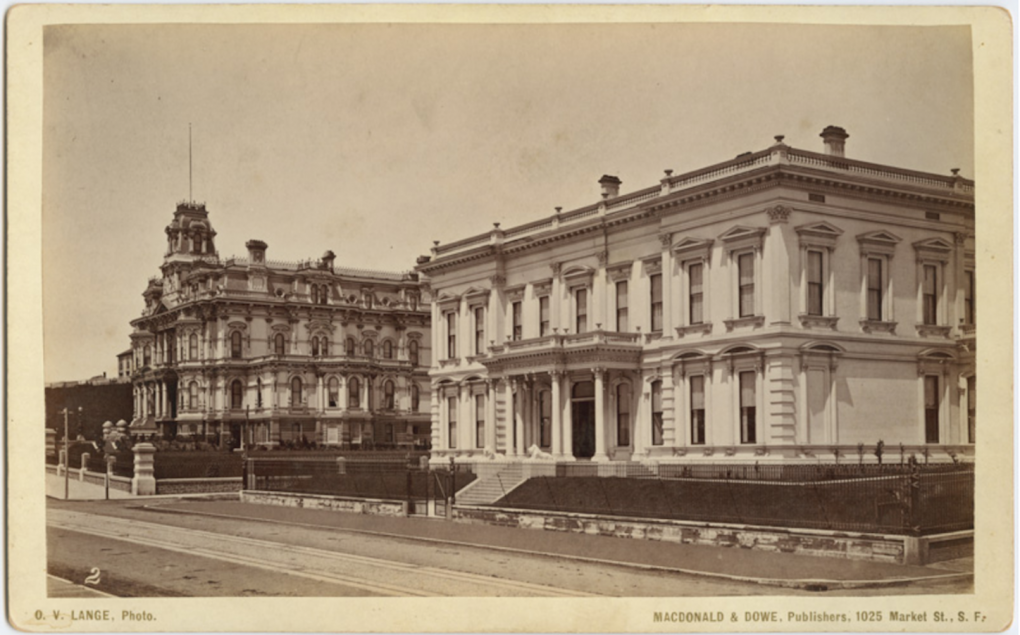
Historically, “Nob” has been a shortening of the British pejorative term “Nabob,” an Anglicization of the Hindustani word Nawab, and originating during the period of the East India Company (early to 1600’s to around 1874), the largest company in the world at the time. The English used the term in reference to those who gained rapid wealth in another country, oftentimes through nefarious means, or those who used their newfound wealth to influence politics. Locals in San Francisco conveyed this term, calling the “nouveau riche” on California Hill “Nabobs.” Soon the area became forever known as Nob Hill.
Healing Hommage?
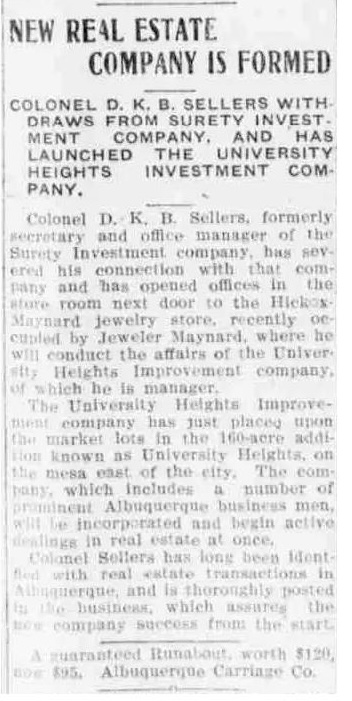
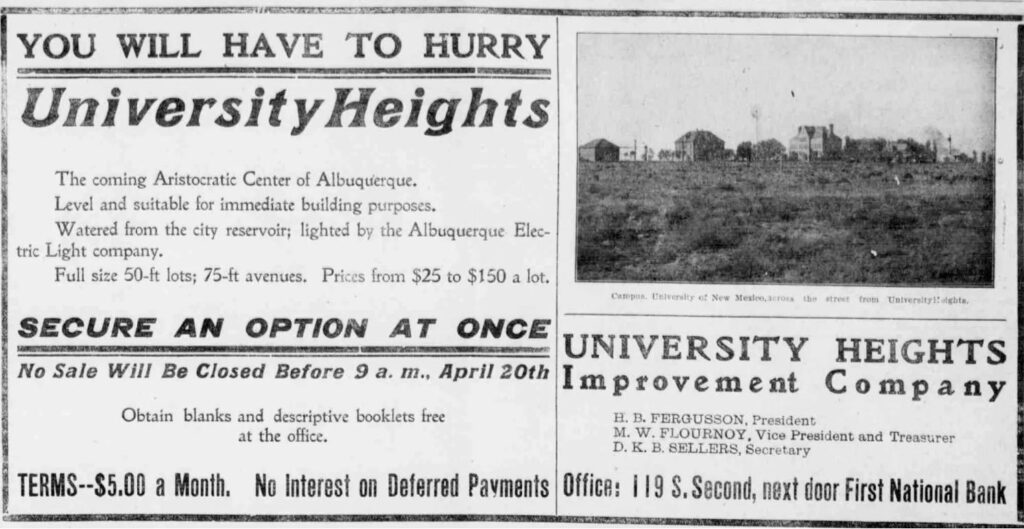
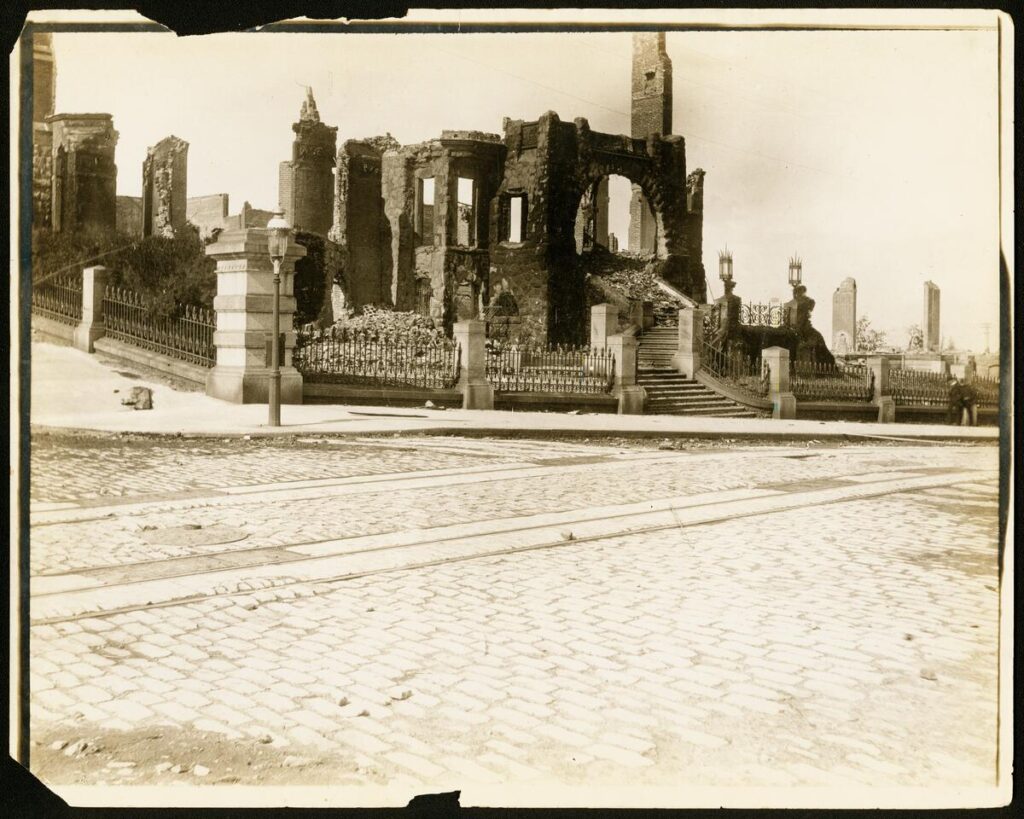
On April 9, 1906, Colonel D.K.B. Sellers formally announced his affiliation with University Heights Investment Company and the first ad ran in the Albuquerque Evening Citizen for lots in the “coming Aristocratic Center of Albuquerque.” Nine days later, Nob Hill in San Francisco burned to the ground during the 1906 earthquake. Perhaps the cosmic timing of these two events influenced Sellers when he decided to rebrand his East Mesa development in 1925.
And perhaps, it is fitting that the Sellers’ namesake legacy references his questionable actions to realize the success of his development interests.
©️ 2026 Michelle Allison