The Tale of Burton Park
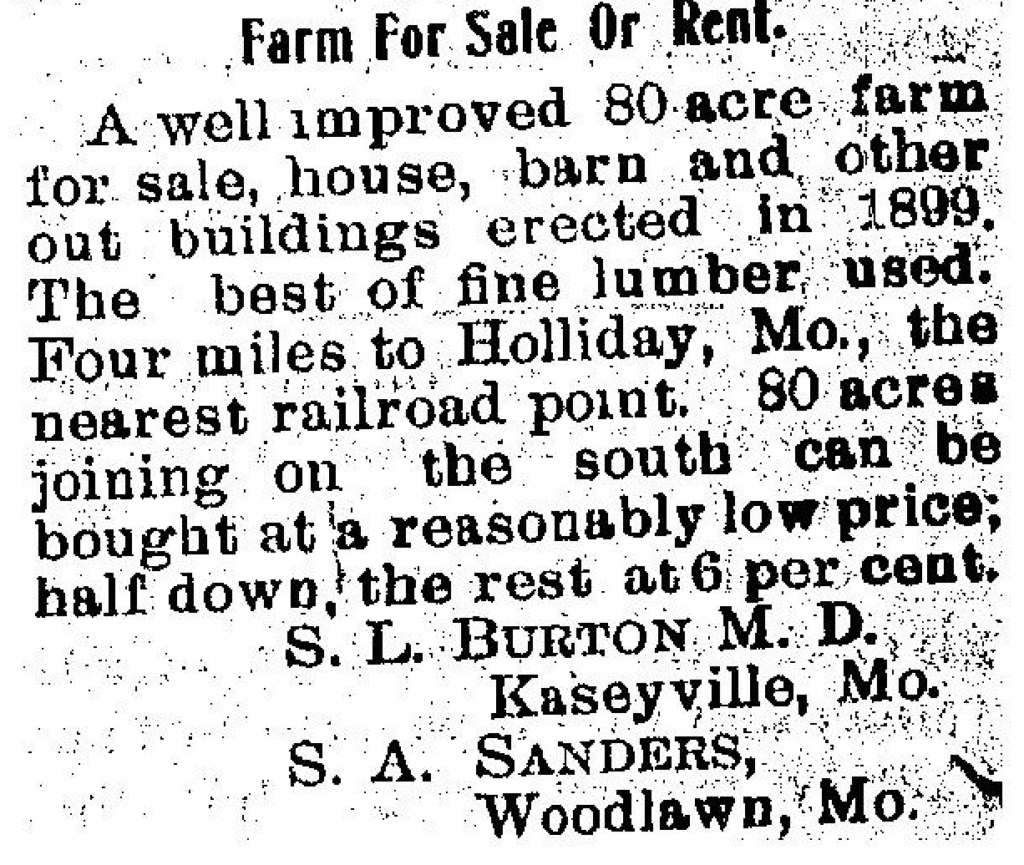
Born in 1870, Solomon L. Burton practiced medicine and lived on a 100-acre farm in Rolling Home, Missouri. Around 1901, a year after marrying his wife, Nann, Burton started advertising the farm for sale.
Health Seeker
It appears the real estate market might have been slow as the Missouri paper indicates that he finally found a buyer in 1906. Apparently, Burton was hemorrhaging a lung at that point and the family headed west for his health. By this time, Burton and his wife had two daughters, Lorena born in 1902 and Tinsley born in 1905.
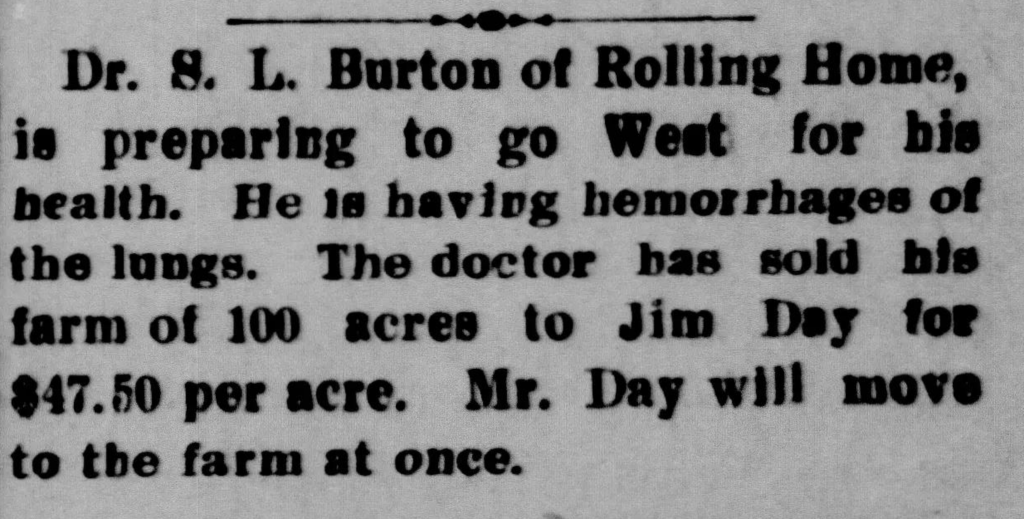
Westward Ho!
Burton and his family arrived in Albuquerque in 1906 and settled at 212 S. High Street, a few blocks from the city’s early sanatoriums. However, it seems the itch for land followed Burton to New Mexico. In early 1907, he began advertising in the want ads for ranching property and by November he had purchased the former Wallis homestead from Andrew W. Cleland for $1 acre. Having just sold his own farm for $48 acres ($1 = $40 now), land in New Mexico must have seemed an excellent investment. According to Patricia Freeman’s research for the Southeast Heights Neighborhoods, Burton had several wells and grazed sheep on the land.
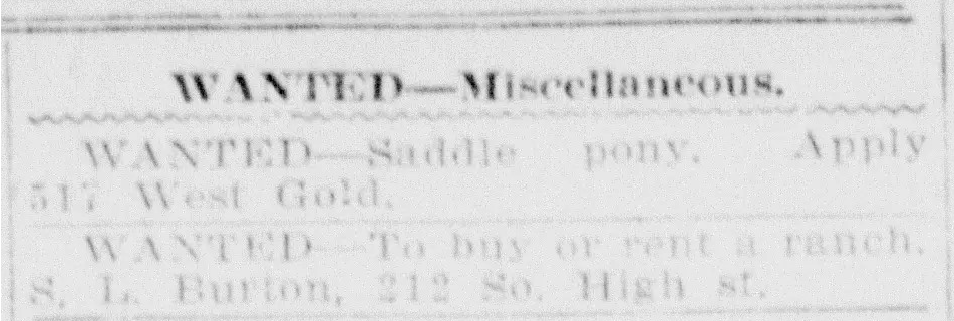
The Cure?
Either NM’s climate worked miracles for Burton, or he kept his sickness on the down low, because he is listed in the 1907 Albuquerque City Directory as residing at 610 S. Walter Street and offering his services as a physician and a surgeon. By the end of 1908, he moved his practice out of house to a room in the Barnett Building in the 200 block of west Central.
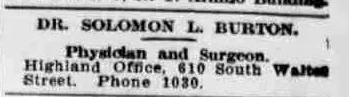
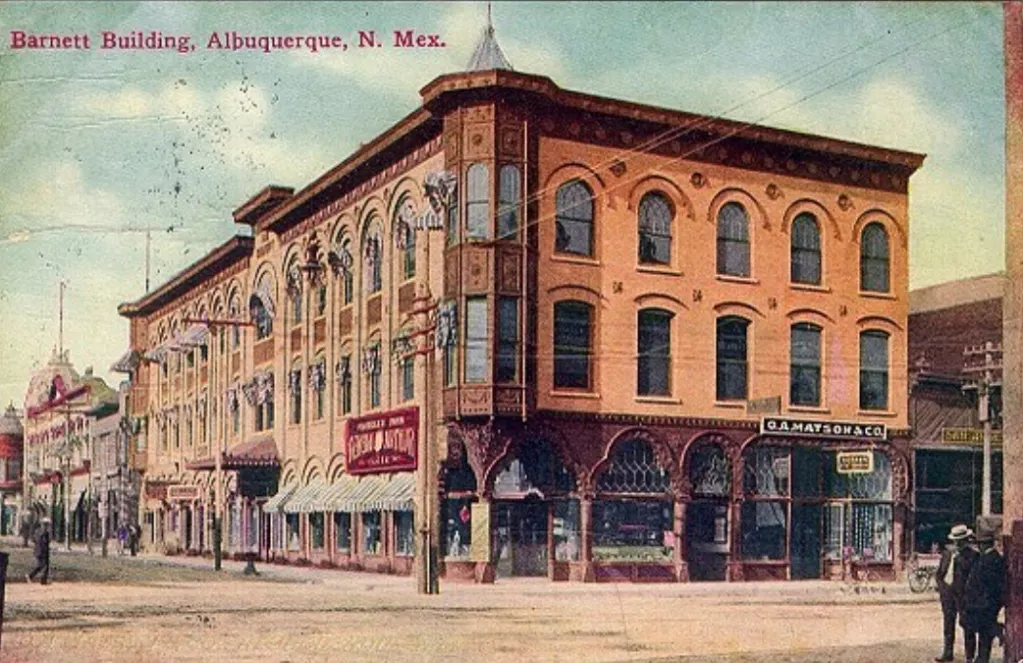
By 1920, Burton seemed to be doing pretty well. He had acquired a 155-acre ranch, purchased the former Siegfried Seligman residence on west Central for $10,000, rented his former residence on S. Walter Street and owned several large tracts of real estate that later became part of the Sunport.
Early Public Health Advocate
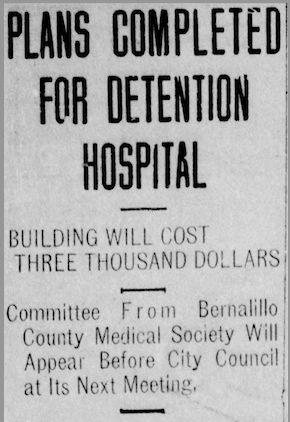
As a physician in Albuquerque, and a “lunger” himself, Burton could not help but be aware of the dire local health environment. Burton felt strongly that those who were sick need to be isolated from those who were well to arrest the spread of disease. In February of 1909, Burton, along with a committee of doctors appointed by the Bernalillo County Medical Society, presented architectural plans and made “an urgent appeal” to the Albuquerque City Council for a “detention facility” for the City and County to “properly take care of contagious cases.” (It should be noted that at the time, infectious diseases included Smallpox, Typhoid and Scarlet Fever, not TB.) By 1910, the city completed the detention facility, a one-story structure with concrete floors, near Lomas and I-25.
A few later, Burton penned an article in the 1911 NM Medical Journal article noting over 50 Native Americans had died from TB and identifying the need for a Territorial and a Federal hospital for consumptive patients in New Mexico, especially the poor, and advocated for the adoption statewide standards to reduce exposure, the fumigation of public buildings and sanitation of housing and furniture between tenants.
Waterwise
Burton served as the City Physician and also engaged in local politics. Well aware (pun intended) of the importance of access to clean and affordable water in maintaining community health, Burton served as president of the Water Users League and urged the city to purchase the privately held local waterworks to ensure lower water rates. Perhaps in response to the rising typhoid concerns on the east mesa, in 1920, he donated 10 acres of his land for a new city reservoir that would double the capacity of the existing reservoir and more importantly increase the water pressure, vital for the rapidly growing development in the “highlands.” The land offer did however have strings, Burton required the reservoir be built within the next three years and be named “Burton Park.”
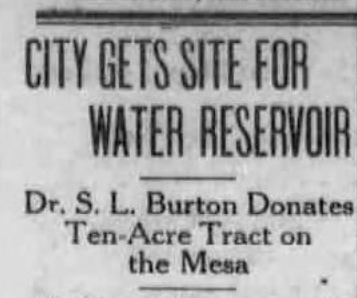
Interestingly in 1923, (about the three-year deadline for the reservoir) Burton apparently had started to envision a development on the east mesa. His initial idea, presented to city council in 1923, featured houses centered around the new reservoir in a parklike setting.
Finally, in 1924, the city constructed the reservoir with a capacity of 3,250,000 gallons. The reservoir, built in two sections, allowed for sections to be individually cleaned and maintained with double the capacity of the reservoir located at Yale. The following year, the city purchased the local private water works, annexed D.K.B. Sellers and other local water systems creating a public water system for Albuquerque.
Hand off
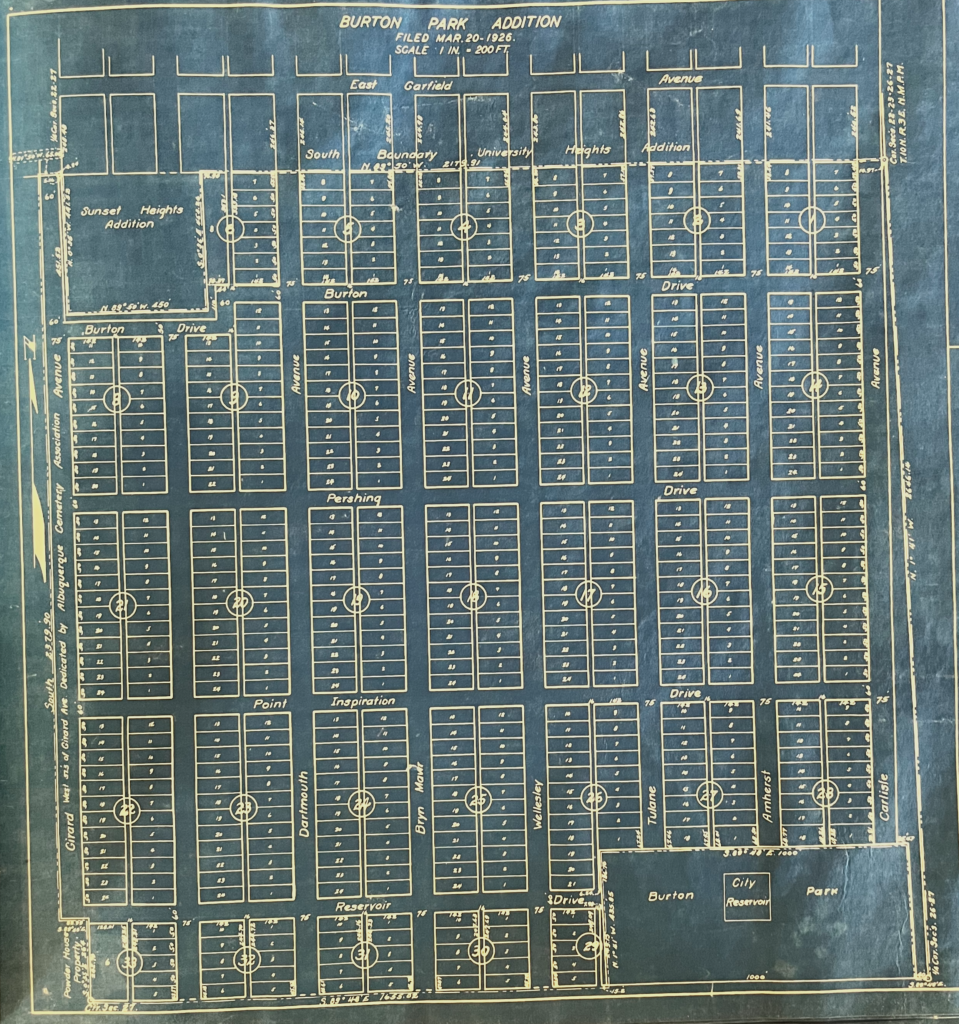
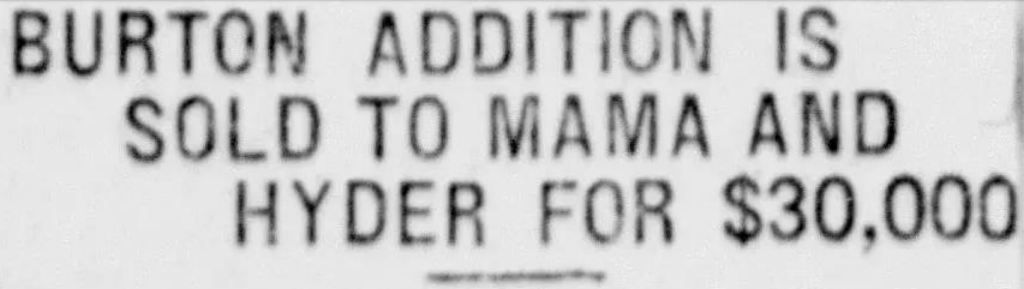
And that same year, Burton got out of the development game in Nob Hill. In March, he filed a plat for the Burton Addition with lots and deeded the 10 acres for the park/reservoir to the city and in July, according to the Albuquerque Journal, he sold 160 acres to Latif Hyder and Salim Mama for $30K.
Career Politician
Burton continued to practice medicine and remained active in politics until his death in 1945. In 1927, he is listed as President of the City Charter Club voting against Tingley corruption and in 1928 put his hat in the ring for Governor. Called a perennial candidate by the Albuquerque Journal, Burton unsuccessfully ran for several offices including state representative in 1940 and in 1942 he simultaneously ran for assessor and state senator.
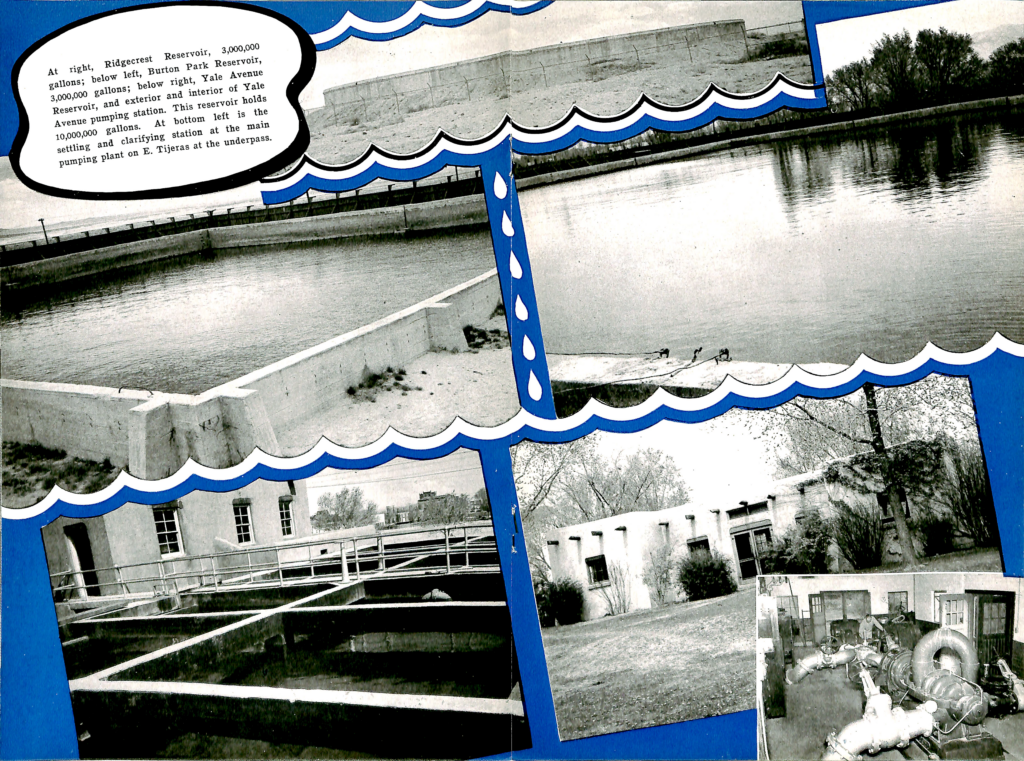
Probably a good thing that Burton’s early vision of homes around the reservoir park did not materialize. By 1948, the uncovered reservoir had developed an extreme algae issue.
©️ 2026 Michelle Allison