Nob Hill Takes to the Skies…
The 1920’s were the heyday of early aviation, with daring pilots pushing the limits of their aircraft through long-distance flights, aerobatic performances, and barnstorming exhibitions. Aviators such as Charles Lindbergh, Amelia Earhart, and New Mexico’s own Katherine Stinson became household names, receiving as much media attention as Hollywood movie stars. Aviation was a form of entertainment, drawing crowds eager to watch death-defying aerobatics, wing-walking stunts, air races, and even competitions between airplanes and automobiles. At the same time, aviation was proving its practical value by dramatically reducing travel times and improving mail service.
First Foray into Flight
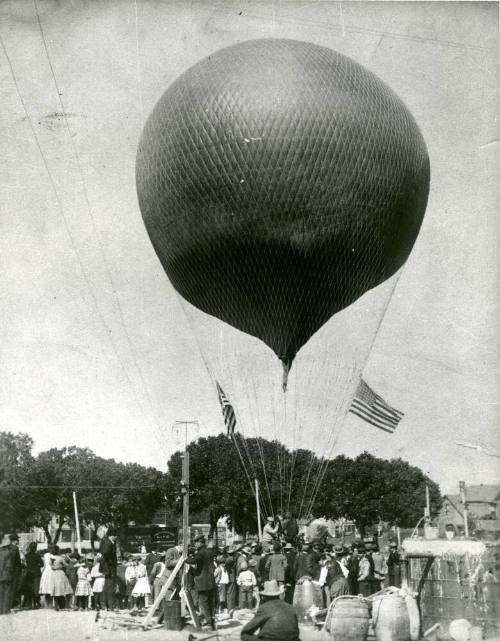
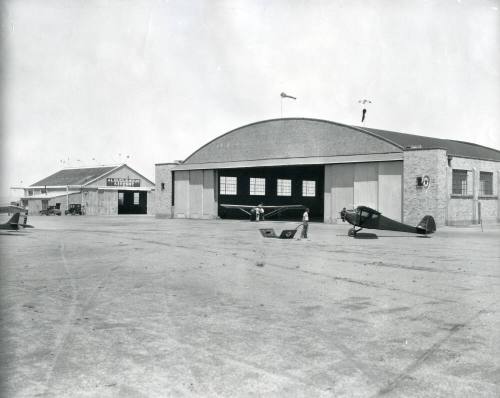
It’s probably no surprise that Albuquerque’s early aviation history began with ballooning, dating to the city’s first local gas balloon ascent in 1882. The first airplane flew over Albuquerque in 1911 during the Territorial Fair, when the Fair Commission hoped to boost attendance by offering airplane rides at Traction Park near Old Town. Albuquerque’s first airport, Oxnard Field, opened on the East Mesa near what is now Gibson and Wyoming Boulevards in 1928 as a private venture. That airport operated for only two years due to its proximity to the mountains but later became part of the air base.
A WING AND A PRAYER
However, Albuquerque’s ascent into the aviation industry actually started in Nob Hill, almost a decade before 1928. The story begins a few months after the end of the Great War, when two relatively unknown outsiders, Lieutenants Joseph H. Witt and Edward J. Mason, approached the Chamber of Commerce with a wild idea to start a commercial aviation training school on the East Mesa.
By January of 1919, despite never having considered establishing a school for aviators in Albuquerque, confidence in the venture was so strong that local businessmen simply pledged their names as collateral for a $6,000 bank loan to finance the purchase of a high-powered training airplane. The Chamber and local business community appears to have recognized the aviation training school as an opportunity to not only attract pilots and aviation businesses to Albuquerque, but also to promote the city at the forefront of transportation innovation.
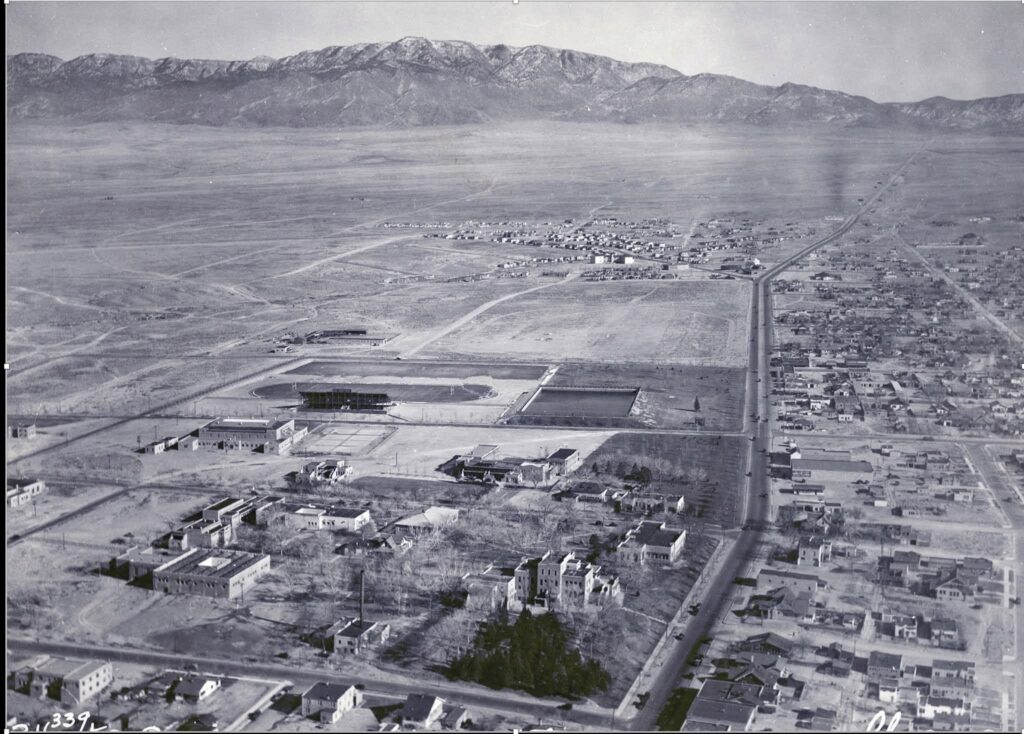
With the funds secured through pledges by local businessmen, things began to move quickly. Lieutenants Joseph H. Witt and Edward J. Mason, along with Witt’s stepfather, M. H. Wood had already purchased two training planes, and immediately set out to purchase the third. A few weeks later, Witt and Mason had leased 160 acres of land north of Central, just east of the old military camp adjacent to the University (now Popjoy and Johnson Field). By March, the new plane had arrived from Toronto, Canada, two hangers were under construction and the school had a wait list with prospective students. With an anticipated April opening, the school would secure Albuquerque as the first site for commercial aviator training in the U.S.
HOLDING PATTERN
However, progress soon stalled. Albuquerque’s strong March winds proved too much for the hangars, causing one to collapse and damage an aircraft. The damaged plane required replacement parts to be shipped in, and the hangars had to be completely rebuilt, delaying the school’s opening.–
Flights of Fancy
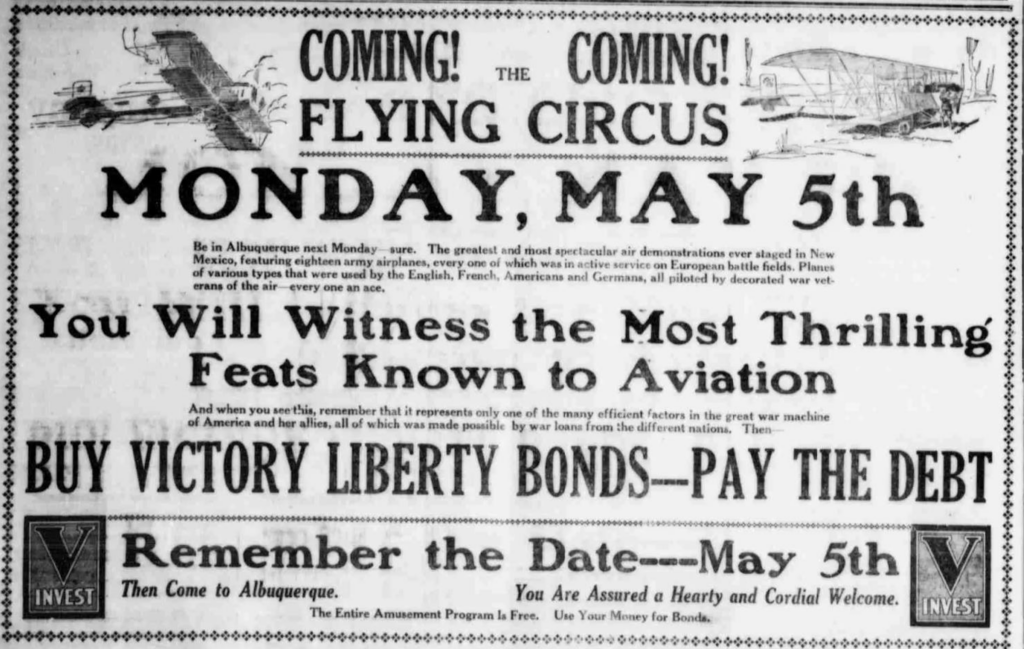
Meanwhile, around this time, the U.S. Treasury Department announced Albuquerque as one of sites for the U.S. Army Air Service tour. Known as the Victory Liberty Loan Flying Circus, the tour featured U.S. and Allied military planes and captured German planes in simulated combat in a war bond campaign. The Flying Circus would be held on May 5, 1919, at the aviation school site.
Unfortunately, the training school’s landing field was too short to accommodate the large military aircraft participating in the event. To prepare the site, the City and County loaned the Chamber of Commerce a truck and road scraper to enlarge and improve the landing field.
CLEARED FOR TAKE OFF
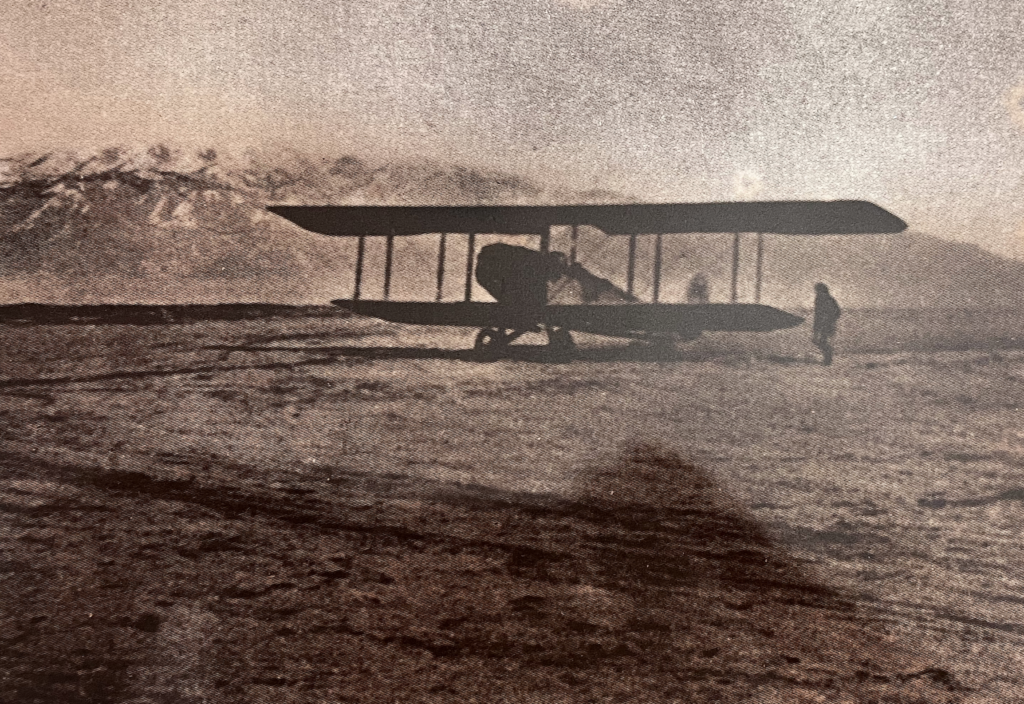
On the morning of the air show, a special train delivered 17 aircraft, 50 enlisted men, and 23 officers to Albuquerque. The Albuquerque Chamber of Commerce provided 15 trucks and five automobiles to transport the flying circus personnel and equipment to the East Mesa. To accommodate the aircrafts’ wide wingspans, streetcar service along Central Avenue was suspended for several hours while the planes were moved to the aviation field, where they were assembled in preparation for the show.
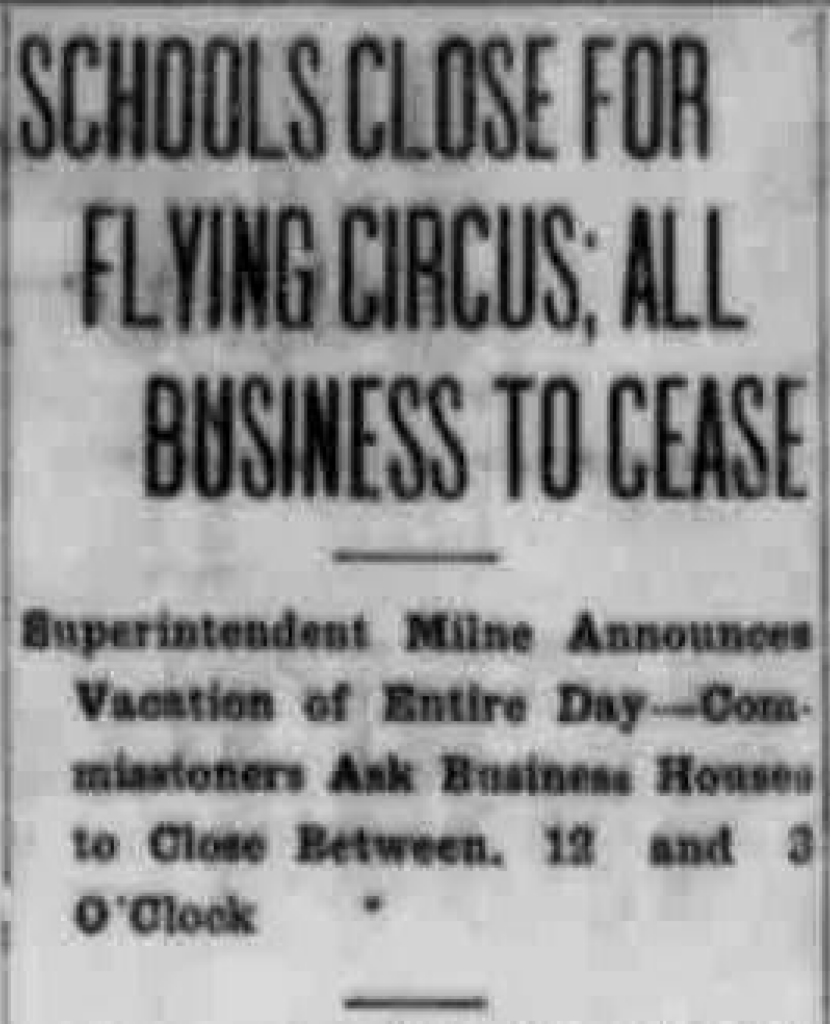
Excitement and anticipation for the Flying Circus spread throughout the New Mexico. The city manager declared a public holiday in honor of the Flying Circus, asking businesses to close from noon to 3pm and the school superintendent closing schools for the day so everyone could watch the show. Spectators could take the streetcar to the event, and vehicle viewing was permitted from the west side of the airfield, keeping the other three sides clear in case of an accident. Despite the high winds on the day of the event, the Flying Circus was a resounding success.
MAY DAY?
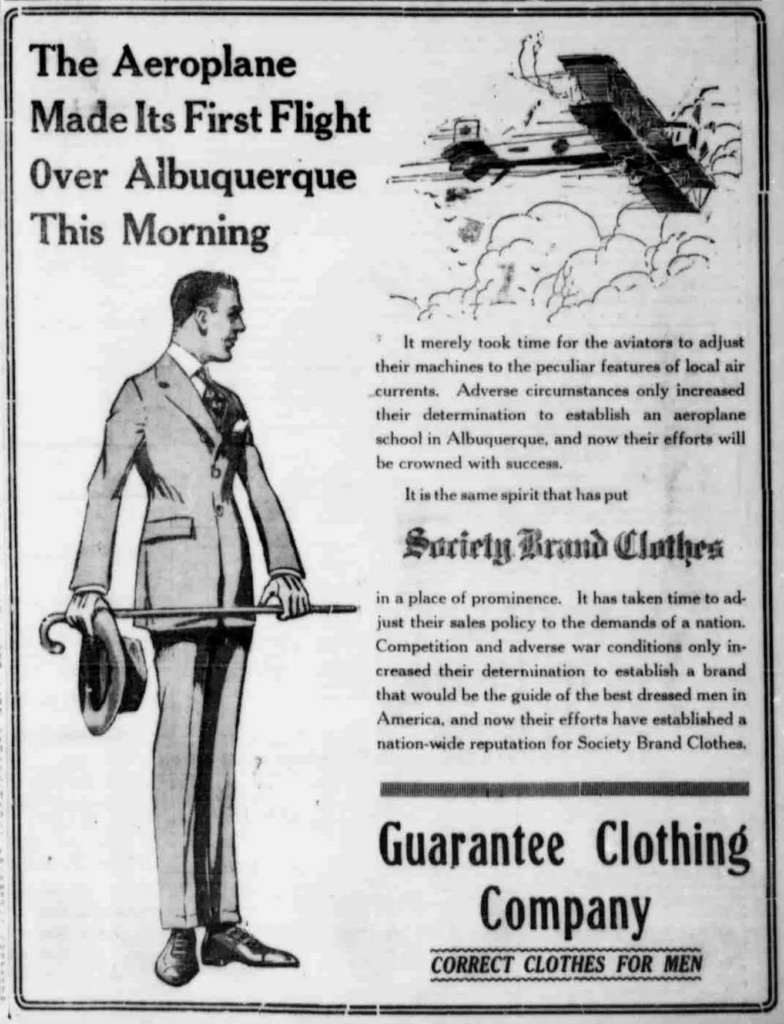
The commercial aviation school, however, would not see similar success. Although an advertisement on April 23, 1919, for a clothing retailer announced the first flight of one of the training planes, the Albuquerque Airplane school was short lived. The experienced pilots of the Flying Circus had struggled to navigate Albuquerque’s gusts and the altitude required significant horsepower for take-off and landings. Noting these difficulties, Lieutenants Witt and Mason feared that these factors were too much of a challenge for novice pilots.
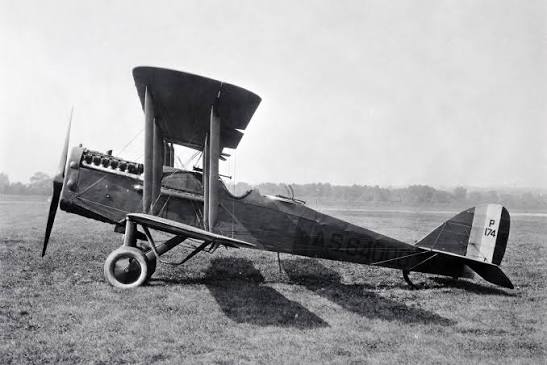
On May 29, 1919, the Albuquerque Morning Journal announced that the school would be moving to Wichita, Kansas. The school’s founders stated Albuquerque’s altitude and proximity to the mountains posed unsafe conditions for new students and even experienced aviators.
©️ 2026 Michelle Allison
For more stories about Nob Hill’s amazing history click here.