We’re in the Army Now? – Nob Hill’s Early Military History
Before we jump into Nob Hill’s building boom in the mid-1920’s, let’s look at a little-known aspect of Nob Hill’s history as a military training outpost.
Reporting for Duty
As most might recall, New Mexico finally won statehood in 1912. Just two years later, on April 6, 1917, the US declared war on Germany, entering WWI. Not surprisingly, as a new state, New Mexico lagged behind other states in military resources. Additionally, having just returned from 18 months of active service dealing with Pancho Villa down in Columbus, the New Mexico National Guard was ill prepared to muster for the new war effort.
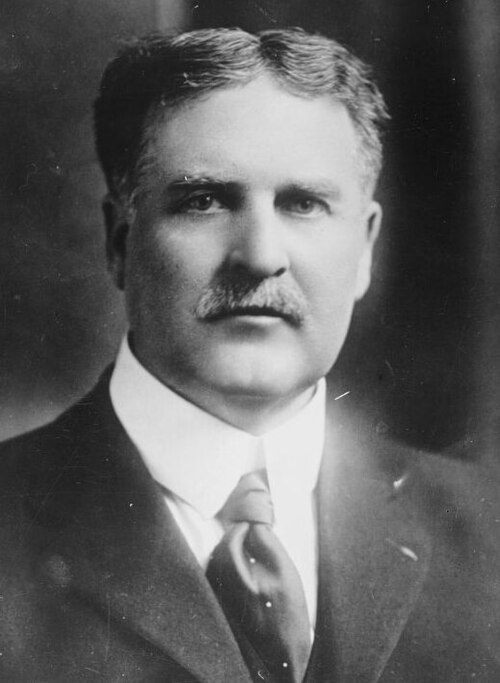
Lacking funds, camp facilities, equipment, and manpower—Battery “A” consisted of just 49 officers and 39 enlisted men—New Mexico faced the challenge of recruiting and training troops quickly. Governor Washington E. Lindsey promptly convened a War Committee to organize the state’s resources in support of the war effort. Unfortunately, the federal government indicated that it would be unable to provide training camps or mobilization support for several months. In response, Governor Lindsey authorized the use of state resources to construct a training camp in Albuquerque.
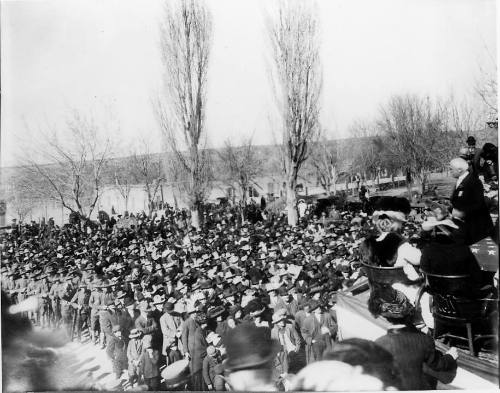
On May 7, 1917, just one month after the United States entered the war, the Albuquerque Evening Journal announced a meeting of the Albuquerque Commercial Club to discuss the location of a state-funded mobilization camp. The article noted that troops were expected to begin arriving within ten days!
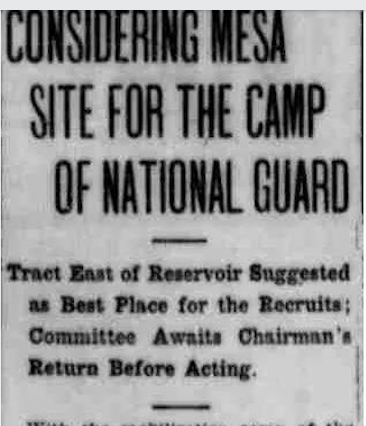
Several East Mesa landowners, including Dr. S. L. Burton, offered sites for the camp free of charge. By May 10, the leading candidates were the Sulzer Tract (Monte Vista Addition) and land owned by A. B. McMillen (possibly in the College View or Broadmoor Addition). The selected site lay about one mile east of the University, just east of D. K. B. Sellers’ water tank, and a quarter mile north of what is now Central Avenue.
On the Double
Representatives from the U.S. Government promised the camp would not be abandoned after the mobilization of the first state regiment, stating a reserve battalion of 500-1000 men would be stationed in Albuquerque for the duration of the war. And if the accommodations in Albuquerque satisfied the war department, it might even continue to serve as a mobilization and training ground for volunteers.
Above and Beyond the Call of Duty
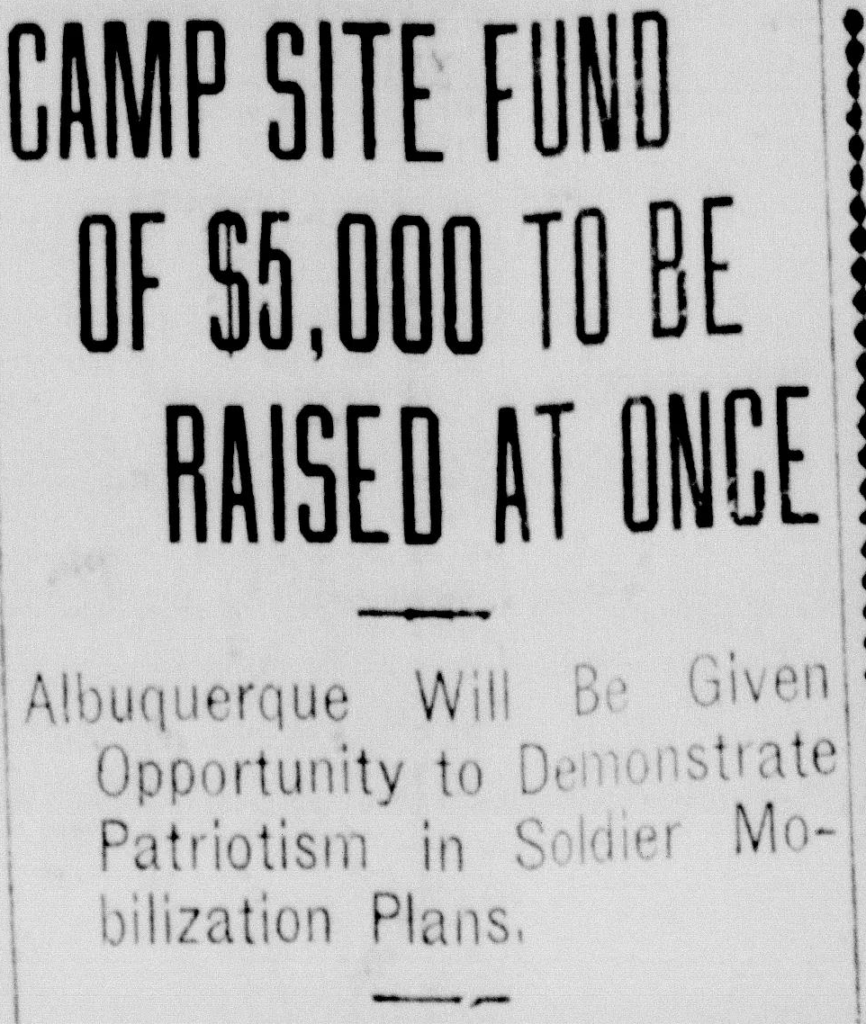
Albuquerque businesses were quick to respond to the patriotic cause and the committee raised $3500 on the first day of the fundraising drive for the mobilization camp. Colonel Sellers, known for his theatrics, included a military guard of several soldiers who stood at attention at the doors as committee members entered local businesses to solicit subscriptions for the effort.
Meanwhile, work began on May 21, 1917, to extend water and electrical service to the National Guard camp, adding 2800 feet of mainline from the University Heights supply lines. The project moved forward rapidly, aided by the fact that McMillan held a controlling interest in both the water and power companies and necessary supplies were already in town. The University Heights Development Company offered to relocate its stand tank to a higher elevation to increase water pressure for the camp at its own expense.
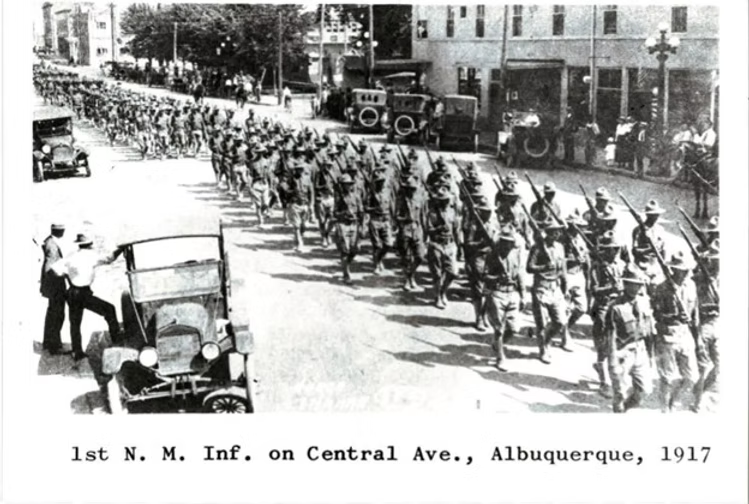
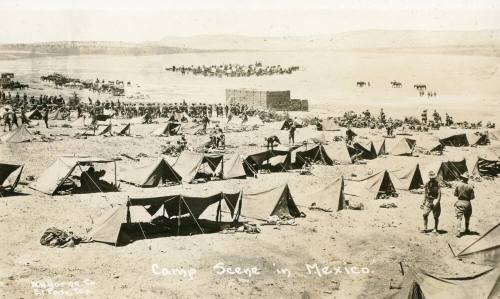
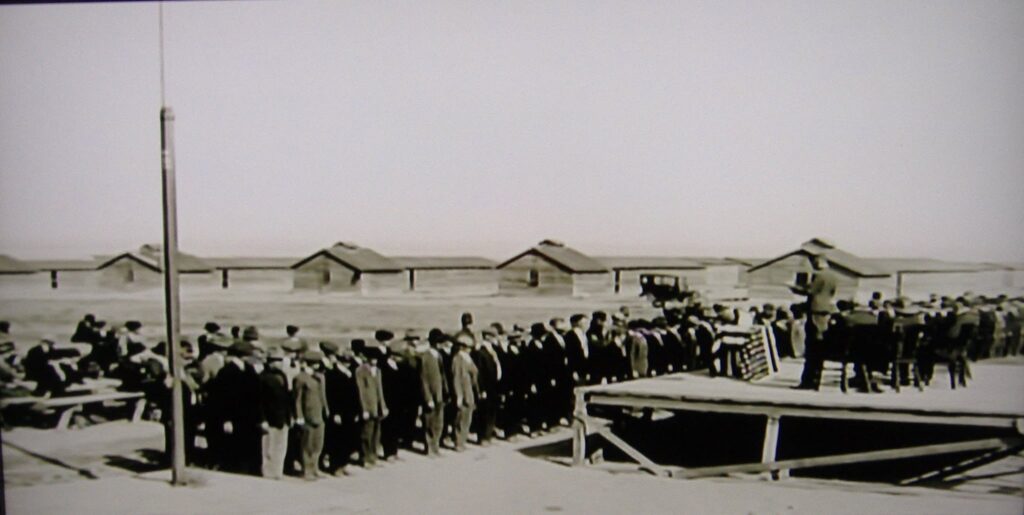
On June 13, 1917, the Albuquerque Morning Journal announced that the 111 members of “L” company of the New Mexico National Guard had moved into the new camp, which apparently meant pitching tents and using the old stoves and cooking gear from the Battle of Columbus days. By the end of June, Adjutant General James Baca reported 2,000 men in good health and spirits living at the camp. The training camp would be known as Camp Funston (not the Camp Funston in Kansas which was the site of the Spanish Influenza outbreak in 1918).
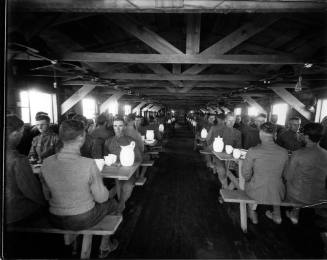
By September of 1917, the paper announced installment of electric lights paid for by the war department, the construction of new cantonments and new equipment in anticipation of the arrival of new recruits. The camp hosted sporting events and other amusements to keep spirits up. UNM advocated for a decrease in travel time between UNM and downtown from 20 minutes to 12 to support the increased demand of the National Guard camp on the trolley. These rapid improvements were viewed as encouraging signs that Albuquerque would remain an active training center, despite the camp’s rudimentary facilities and equipment, which reflected the short notice and limited funding available for its construction.
Over and Out
Unfortunately, city boosters may have jumped the gun in anticipating the growth of military activity on the east mesa (at least for the near future). Battery “A” completed four and a half months intensive training at the camp and left for France (second battle of the Marne) via Camp Greene, NC and the camp was abandoned on October 14, 1917, when the First New Mexico Infantry left for Camp Kearny in Linda Vista, California.
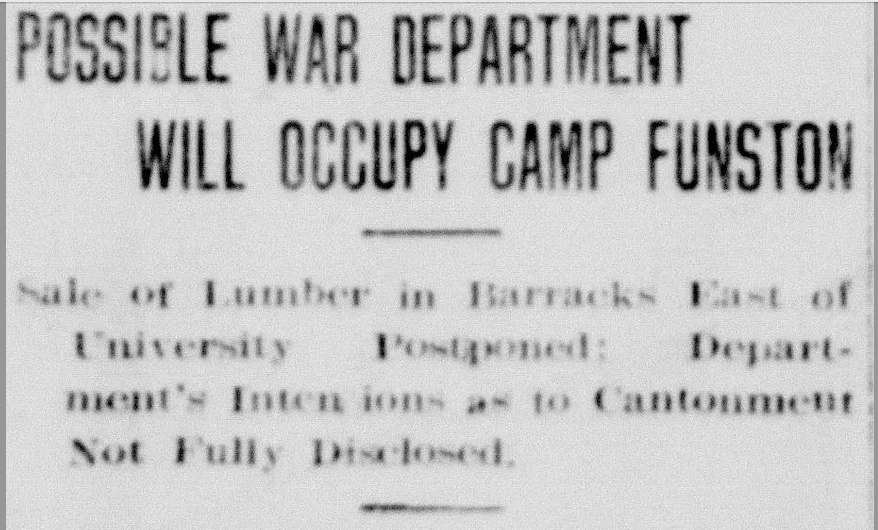
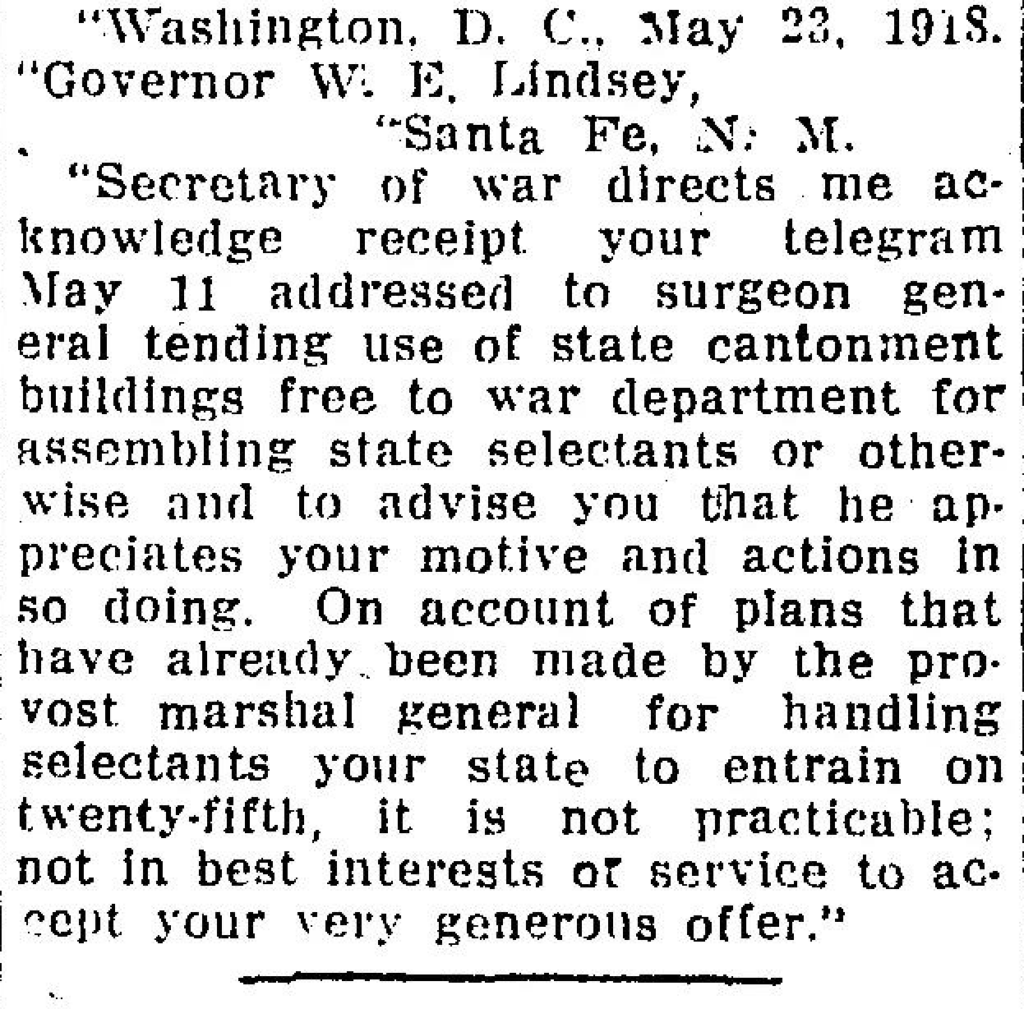
Hoping to support a more permanent US Army facility on the east mesa, the Chamber of Commerce offered the site to the war department. At one point, the federal government considered using it for a hospital. However, a telegram from Governor Linsey on May 23, 1918, ended any remaining hope for the camp stating that the war department would not accept the state cantonment.
Biting the Bullet
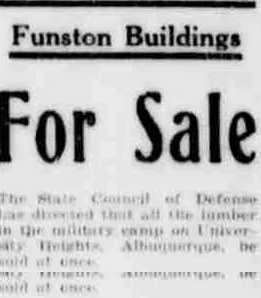
In August of 1918, the State Council of Defense offered the lumber from the camp buildings for sale. The camp, lasting only four months, had cost the businesses of Albuquerque over $4,000 around $104,000 today.
Other East Mesa War Efforts
However, the war effort’s impact on the East Mesa did not end there. Governor Lindsey also leveraged the University of New Mexico’s resources to support wartime needs. In February 1918, the UNM Board of Regents authorized the purchase of three quarter-sections of federal land approximately 1.5 miles northeast of campus (in the present-day McDuffie/Hidden Park area) to establish a university farm and increase the state’s food production. The university also adopted a four-quarter academic calendar, enabling students to work on farms during the summer months.
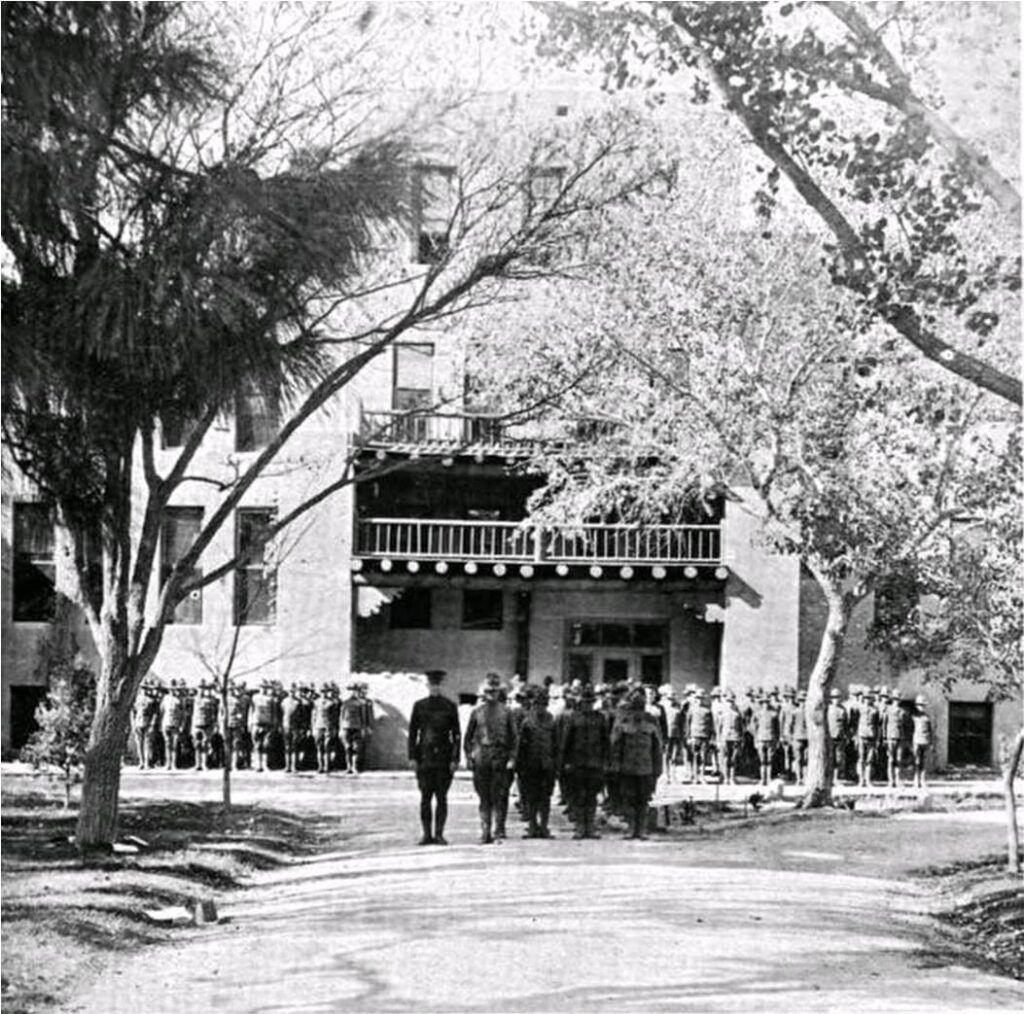
In the spring of 1918, Governor Lindsey funded a Student Army Training School at UNM to enroll students aged eighteen and older. Participants would hold military status, although only those over twenty-one would be eligible for combat duty, a policy intended to help preserve university enrollment. Recruitment efforts focused heavily on high school students. Recognizing the program’s potential to attract new residents and stimulate population growth, the Albuquerque Chamber of Commerce provided funds to support UNM’s goal of recruiting one hundred male students to establish a military training program on campus.
Locating New Mexico’s training school, on the UNM Campus seemed a win-win. UNM’s enrollment had dropped 15-20% in 1916 due to the raid of Pancho Villa and with the war effort, by 1917 the male student population decreased by 70%, and resulted in the loss of the entire football team. The program would benefit from university resources and UNM would receive funds for rent and utilities and enroll young men in wartime academic programs.
Join Forces
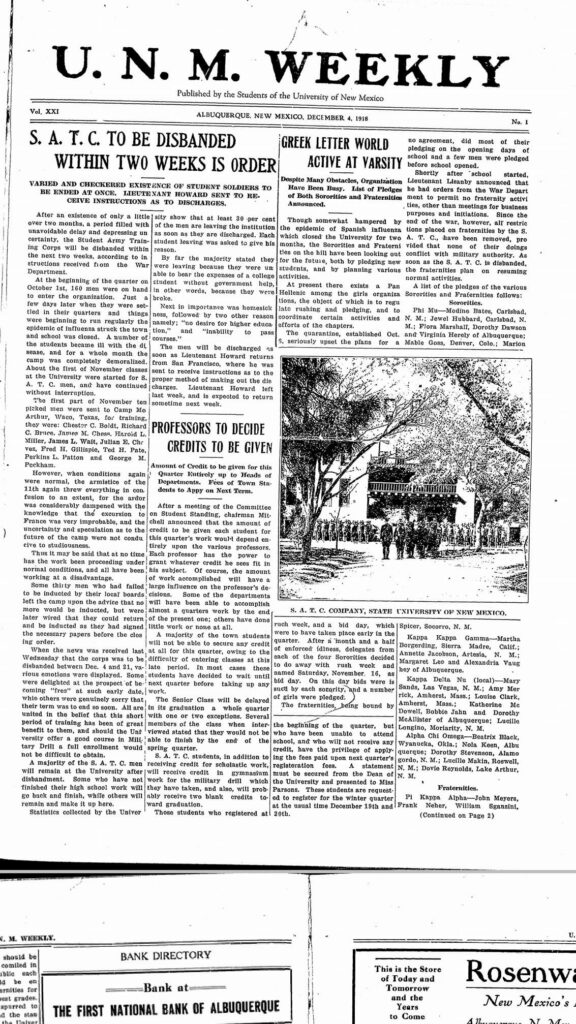
During the war, UNM President David Ross Boyd successfully petitioned for the university to become a sanctioned training school for the U.S. Army Corps of Engineers. The federal government also established a Student Army Training Corps (SATC) unit at UNM to help meet the military’s demand for engineers, physicians, and other highly trained professionals. These programs brought federal support and resources that helped expand the university’s academic offerings and accelerate its institutional development
When the war ended on November 11, 1918, UNM’s wartime programs were discontinued. Nevertheless, the Great War played a significant role in transforming the university from what was often described as a “glorified high school” into an accredited institution by 1922.
.
©️ 2026 Michelle Allison